Flying at the edge of the stratosphere isn’t just a line from a sci-fi movie—it’s a student project at MIT, where first-years are learning to launch balloons 20 kilometers up. On a frigid December morning in the Catskills, a group of students huddled around a picnic table, fiddling with hand warmers. One for their hands. One to keep their electronics from freezing. They had 30 minutes before the helium balloon would carry their payload into the sky.
MIT’s 16.00 course: A new way to learn
Five student teams completed stratospheric balloon launches as a final project in MIT’s revamped 16.00 course. The class, co-taught by Jeffery Hoffman (a former NASA astronaut) and Oliver de Weck, was reintroduced in 2025 after being sidelined during the pandemic. “Students don’t want to sit through long lectures,” de Weck says. “They want to build things.”
Read Also: How Personal Tech and Social Media Are Driving the Decline of Humanity
The course is part of a broader effort to make AeroAstro more hands-on. Future iterations will include fixed-wing aircraft and rockets. This semester’s version focused on balloons, with students designing, building, and testing payloads. “We felt it was time to bring the course back,” de Weck says. “Give it new life.”
Over 13 weeks, students learned about atmospheric composition, radio waves, and flight regulations. Labs involved building Arduino-based sensors and testing communication systems. On launch day, the cold was brutal. Gusts forced the team to rethink their landing zone. “We aimed to fly east,” says Jackson Lunfelt, a first-year student. “But the wind pushed us west.”
The balloon that almost didn’t fly
Lunfelt’s team spent weeks tweaking their design. Their 3D-printed frame had to be light enough to stay buoyant but strong enough to hold the payload. They tested weights, recalibrated sensors, and even added a battery bank to keep the GoPro running in the cold. “If you don’t do this,” Lunfelt says, “you’re not gonna launch.”
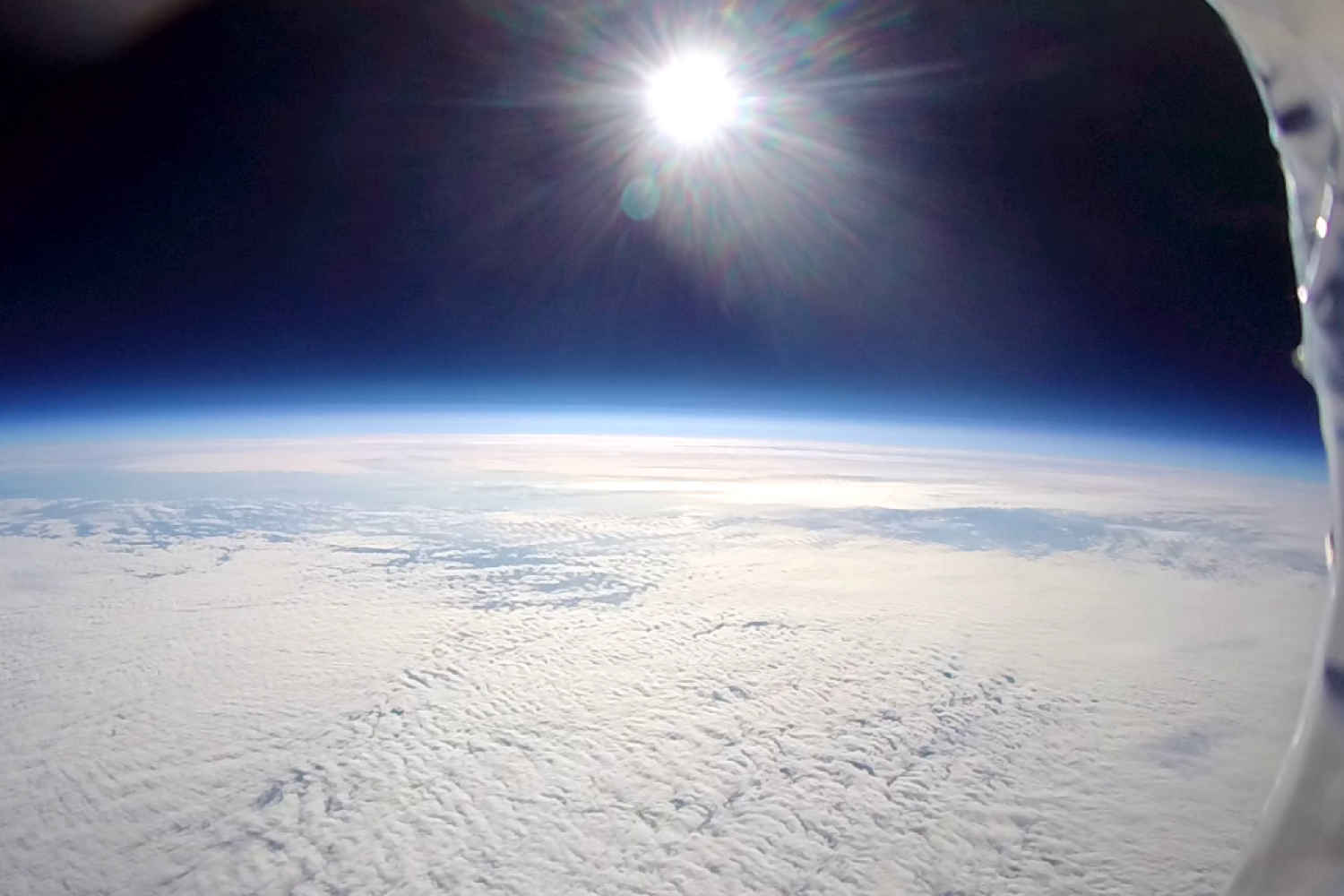
The balloon lifted off the Catskills, rising hundreds of feet per minute. It passed the troposphere, crossed Western Massachusetts at 100 mph, and climbed to 22 kilometers—high enough to see Earth’s curve. Then, as planned, the latex balloon burst. The parachute deployed. The payload drifted down, landing near Nashua, New Hampshire.
Locals spotted the MIT stickers and helped recover the equipment. The landing made local news. “Every single moment of that video was amazing,” Lunfelt says. “It was truly a story in itself.”
MIT’s got the right idea—hands-on learning beats lectures any day. The AeroAstro program adds 60 undergrads a year. Future courses will include 16.00A (fixed-wing aircraft) and 16.00B (balloons). The department’s strategic plan? More of this. Less PowerPoints.
Some days, the weather is so bad you have to move the launch site. Like the time when the wind pushed them across the New York border. No one asked for that. But the payload came back in one piece. That’s the real win.
MIT News Office manages this site. The Institute’s address: 77 Massachusetts Avenue, Cambridge, MA, USA.