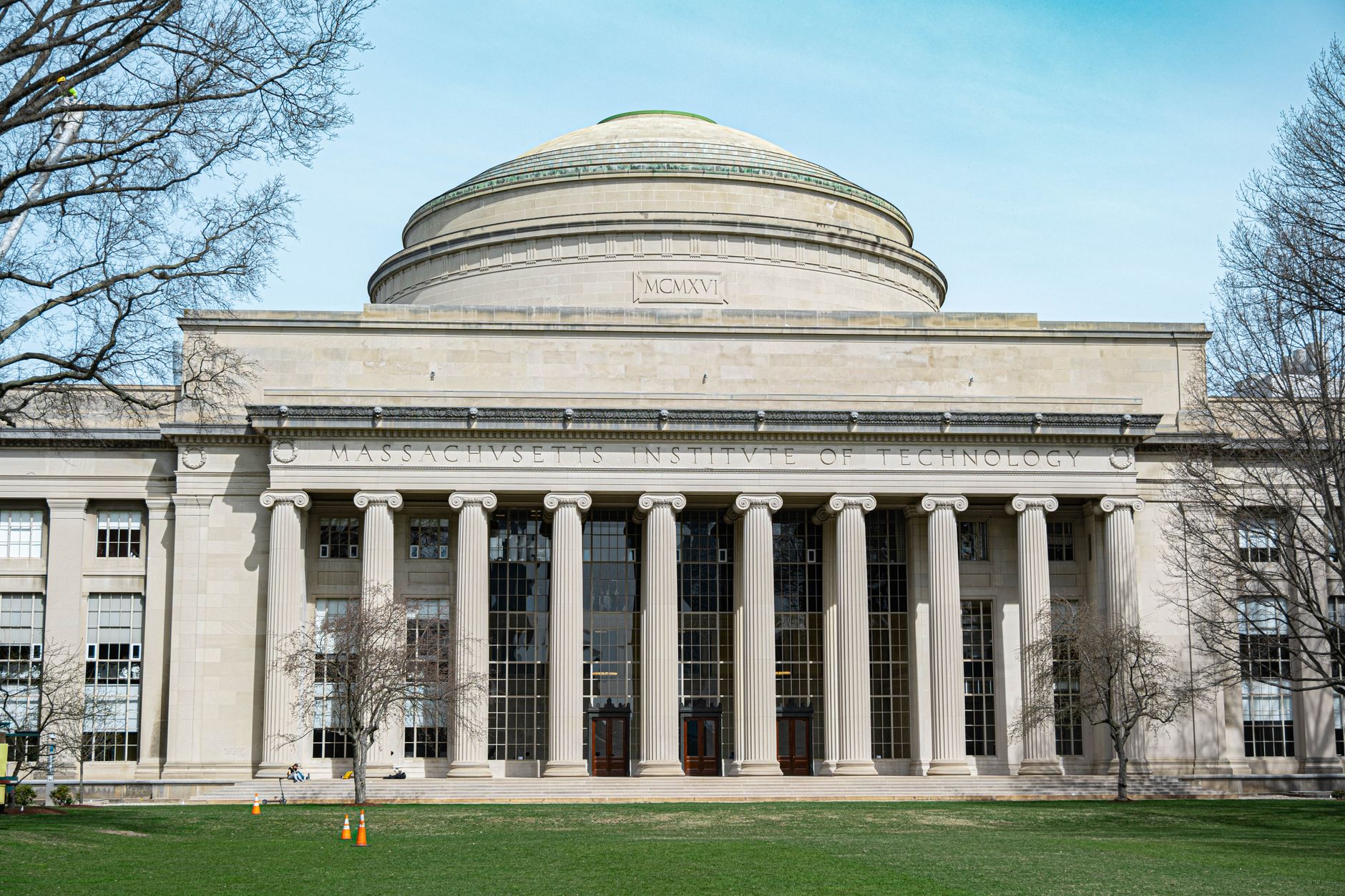
The MIT School of Humanities, Arts, and Social Sciences (SHASS) was founded in 1950 in response to a new era emerging from social upheaval and the disasters of war, as outlined in the 1949 Lewis Committee Report.
The report’s findings emphasized MIT‘s role and responsibility in the new nuclear age, which called for doubling down on genuine integration of scientific and technical topics with humanistic scholarship and teaching.
Read Also: Forgiveness Linked to Better Well-being
As SHASS marks its 75th anniversary, Dean Agustín Rayo answers questions about why the need for developing students with broad minds and human understanding is as urgent as ever, given pressing challenges in the midst of a new technological revolution.
Q&A with Dean Agustín Rayo
Q: Many universities are responding to artificial intelligence by launching new technical programs or updating curricula. You’ve suggested the change is deeper than that. Why?
A: Artificial intelligence isn’t just changing the way students learn — it’s transforming every aspect of society. The labor market is experiencing a dramatic shift, upending traditional paths to financial stability. And AI is changing the ways we bring meaning to our lives: the ways we build relationships, the ways we pay attention, and the things we enjoy doing.
The upshot is that the most important question universities need to ask is not how to adapt our pedagogy to AI — although we certainly need to address that. The most important question we need to ask is how to provide an education that brings real value to students in the age of AI.
We need to ensure that universities provide students with the tools they need to find a path to financial security and to build meaningful lives. We need to produce students with minds that are both nimble and broad.
Role of the Humanities, Arts, and Social Sciences
Q: What role do the humanities, arts, and social sciences play in preparing MIT students for that future?
A: They’re essential, and are rightly a core part of an MIT education: MIT has long required its undergraduates take at least eight courses in HASS disciplines to graduate.
Fields like philosophy, political science, economics, literature, history, music, and anthropology are crucial to developing the parts of our lives that are essentially human — the parts that will not be replaced by AI.
Our students understand this. Here is how one of them put the point: “Engineering gives me the tools to measure the world; the humanities teach me how to interpret it. That balance has shaped both how I do science and why I do it.”
Addressing Concerns about Technological Edge
Q: Some people worry that emphasizing humanistic study could dilute MIT‘s technological edge. How do you respond to that concern?
A: I think the opposite is true. MIT is an important engine for social mobility in the United States, and a catalyst for entrepreneurship, which has added billions of dollars to the American economy.
But I also think that the age of AI is forcing us to rethink what it means to be a top engineer. Think about artificial intelligence itself. The challenges we face are not just technical. Issues like bias, accountability, governance, and the societal impact of automation are no less important.
Understanding those dimensions helps technologists design better systems and anticipate real-world consequences. Strengthening the humanities at MIT isn’t a departure from our core mission — it’s a way of ensuring that our technical leadership continues to matter in the world.
MIT SHASS is pursuing several initiatives to support this vision, including the launch of the MIT Human Insight Collaborative (MITHIC) and the creation of shared faculty positions with the MIT Schwarzman College of Computing (SCC).
The MITHIC aims to strengthen research in the humanities, arts, and social sciences, and to deepen collaboration with colleagues across MIT. The initiative will also focus on shaping the undergraduate experience to ensure that every MIT student engages with the big societal questions shaping our time.
In room 4-231, a recent meeting discussed the details of the MITHIC initiative. The meeting started at 2 PM and lasted for about 2 hours.
The Music Technology and Computation Graduate Program with the School of Engineering is another example of MIT SHASS‘s efforts to support this vision. The program aims to provide students with a comprehensive education in music technology and computation.
These initiatives demonstrate MIT SHASS‘s commitment to providing students with a well-rounded education that prepares them for success in the age of AI.



Leave a Reply