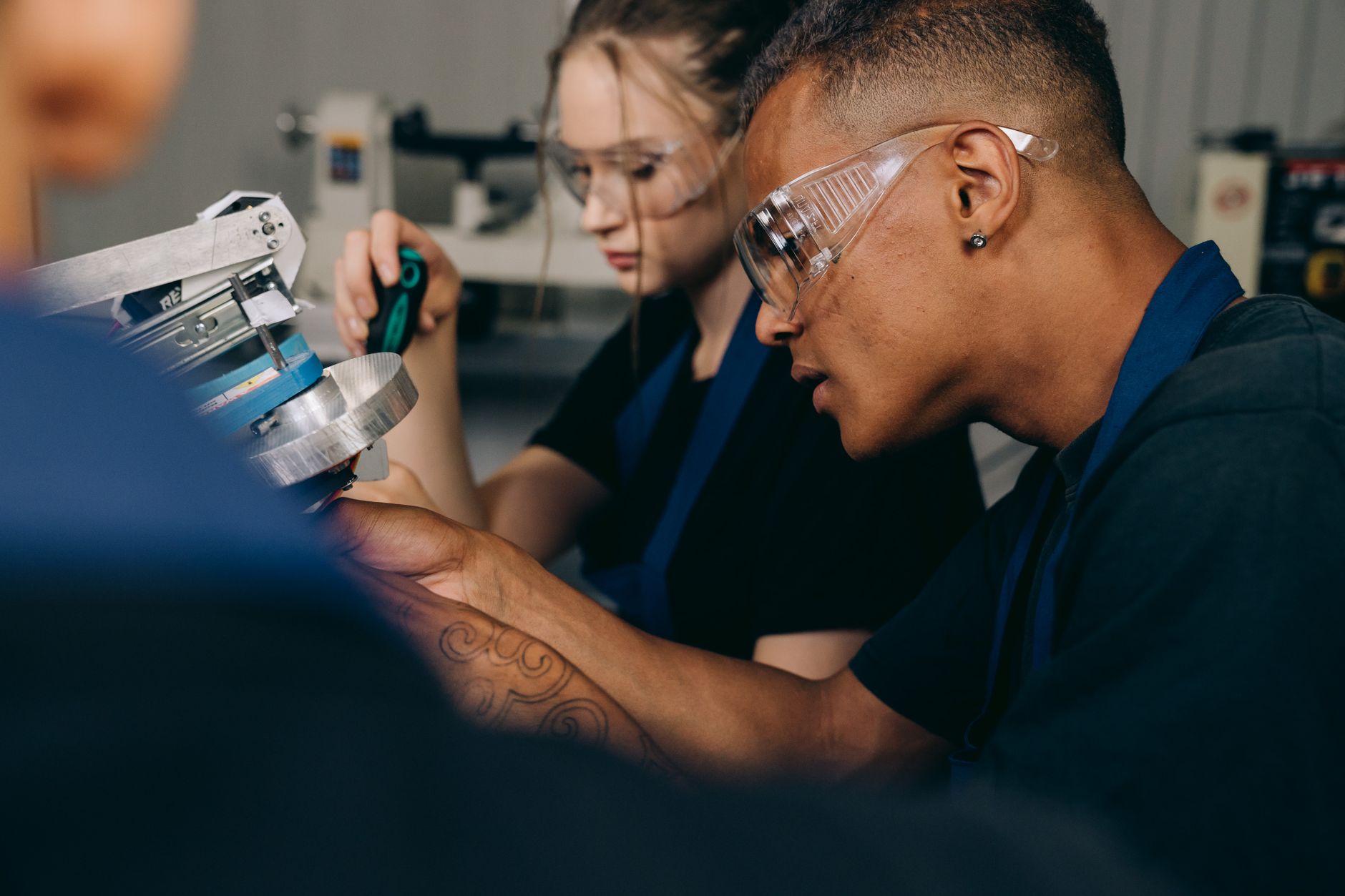
MIT’s Pappalardo Apprentice program blends lab work, mentorship, and historical engineering to train students in fabrication and design. Launched to address a need for lab support and a desire to deepen students’ skills, the initiative pairs juniors and seniors with roles as lab assistants for MechE’s 2.007 course. Apprentices help with machining, brainstorming, and peer support, while also attending seminars on CAD/CAM, milling, and casting.
Junior apprentices build Stirling engines, while seniors tackle larger projects like replicas of 19th-century marine engines. This spring, students are crafting a copper alloy version of an 1899 anchor windlass used on New York 70 class sloops. The project requires reverse-engineering century-old blueprints, a process Braunstein calls “technical archaeology.”
Read Also: Barcelona Trials New Sustainable Farming Methods
“We don’t know how they made [the parts],” says Braunstein. “So, there’s an element of discovery.” Apprentices apply intuition to shape parts, balancing function with aesthetics. Jade Durham, an apprentice, notes that the project exposed her to metallurgy—a topic rarely covered in standard curricula.
The program emphasizes hands-on learning, a hallmark of MIT’s MechE department. Named after Neil Pappalardo ’64, the lab is known as the “most wicked” on campus—a term meaning something is exceptionally good in Boston slang. Wilhem Hector, an apprentice, calls it “my favorite place on campus,” where he gained confidence to create anything.
Braunstein designed the program to build community and reinforce learning. He borrowed language from traditional trades, highlighting MIT’s industrial roots. “It was not a science institution; it was about the mechanical arts,” he says. The program’s 10th anniversary in 2023 marked a decade of blending academic rigor with practical skills.
For Braunstein, the program’s reward lies in watching students grow. He describes seeing apprentices transition from “bright-eyed” newcomers to skilled mentors who can “pour iron” and “tram mills.” The lab’s focus on historical projects, like the Herreshoff windlass, adds a layer of curiosity to the work.
The Pappalardo Lab, located at 77 Massachusetts Avenue in Cambridge, houses the program. Its projects, including replicas of early 20th-century engines, are displayed at the MIT Museum. Students work with original designs, translating old sketches into functional parts—a challenge that demands both technical precision and creative problem-solving.
Apprentices also engage in metallurgy seminars, an area Braunstein says opened his eyes to the importance of material choice in engineering. “I think [the project] really opened up my eyes to how much material choice is an important thing for engineering in general,” says Durham. The program’s blend of history, mentorship, and hands-on work continues to shape how students approach design and fabrication.





Leave a Reply