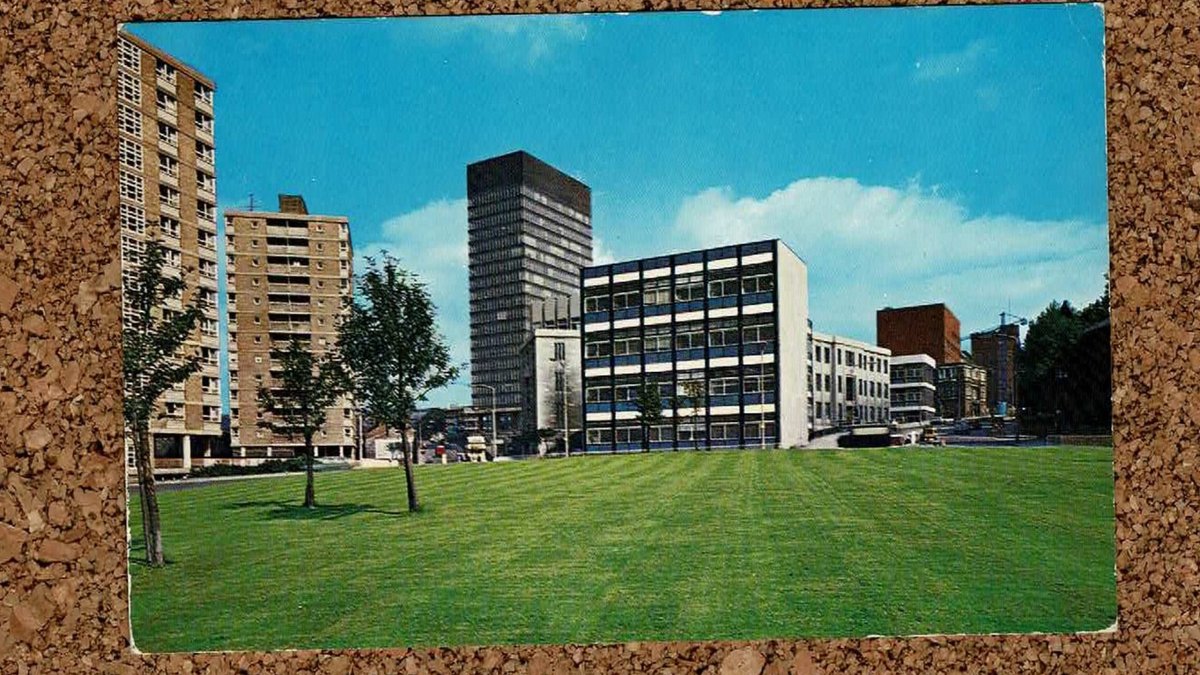
The Arts Tower at the University of Sheffield, which the Queen Mother officially opened on 23 June 1966 as part of a two-event visit—attending the Hyde Park flats dedication in the afternoon—was not only a landmark in higher education but also a symbol of post-war urban ambition. The Scotsman reported the following day on her presence, framing the occasion as a moment of civic pride. The tower’s construction reflected the era’s confidence in institutional growth, with its 19-story height making it the tallest building in Sheffield for four decades. Critics and admirers alike have described it as “the most elegant university tower block in Britain of its period,” though its resemblance to New York’s Seagram Building—designed by Mies van der Rohe—was dismissed by its architects as coincidental. The Sheffield design prioritized functional requirements over stylistic imitation, with its concrete structure shaped by the need to accommodate the university’s expanding arts faculty, which initially housed all 18 departments.
A Relic of Mid-Century Engineering
The tower’s paternoster lift, an enduring curiosity, operates as a relic of mid-century engineering. These continuous-loop elevators, named for the Latin Pater Noster (a reference to the Lord’s Prayer), were once common in public buildings but fell out of favor due to accessibility concerns and safety regulations. The BBC has documented their operation in a short film, capturing their unsettling yet efficient motion—an experience some, like former LSE students, found oddly charming despite their limitations. The lift’s survival through the 2009–2011 refurbishment, which included double-glazed windows and updated plumbing, shows its historical value, even as modern elevators now dominate university campuses. The tower’s modernization efforts, though necessary, preserved its original character while addressing structural and environmental shortcomings, such as the need for better insulation and functional utilities.
Related: Scottish universities urged to prioritize scarcity over expansion
Sheffield’s Skyline and Transport Evolution
A vintage postcard from the late 1960s or early 1970s—undated but identifiable by the blue-and-white bus parked at its base—offers a snapshot of Sheffield’s transportation history. The bus’s livery, distinct from the later coffee-and-cream scheme introduced in 1974 under the South Yorkshire Passenger Transport Executive (SYPTA), marks a shift in municipal design following England’s 1974 local government reforms. These reforms created metropolitan counties, centralizing transport administration under SYPTA, which later came under the South Yorkshire mayor’s jurisdiction. Archival footage from the 1970s and 1980s, accessible through historical records, reveals how the tower’s dominance in the skyline mirrored the city’s evolving infrastructure, from bus routes to urban planning. The postcard’s unposted status adds a layer of mystery, leaving its exact date speculative but anchoring it firmly in an era of rapid change.





Leave a Reply