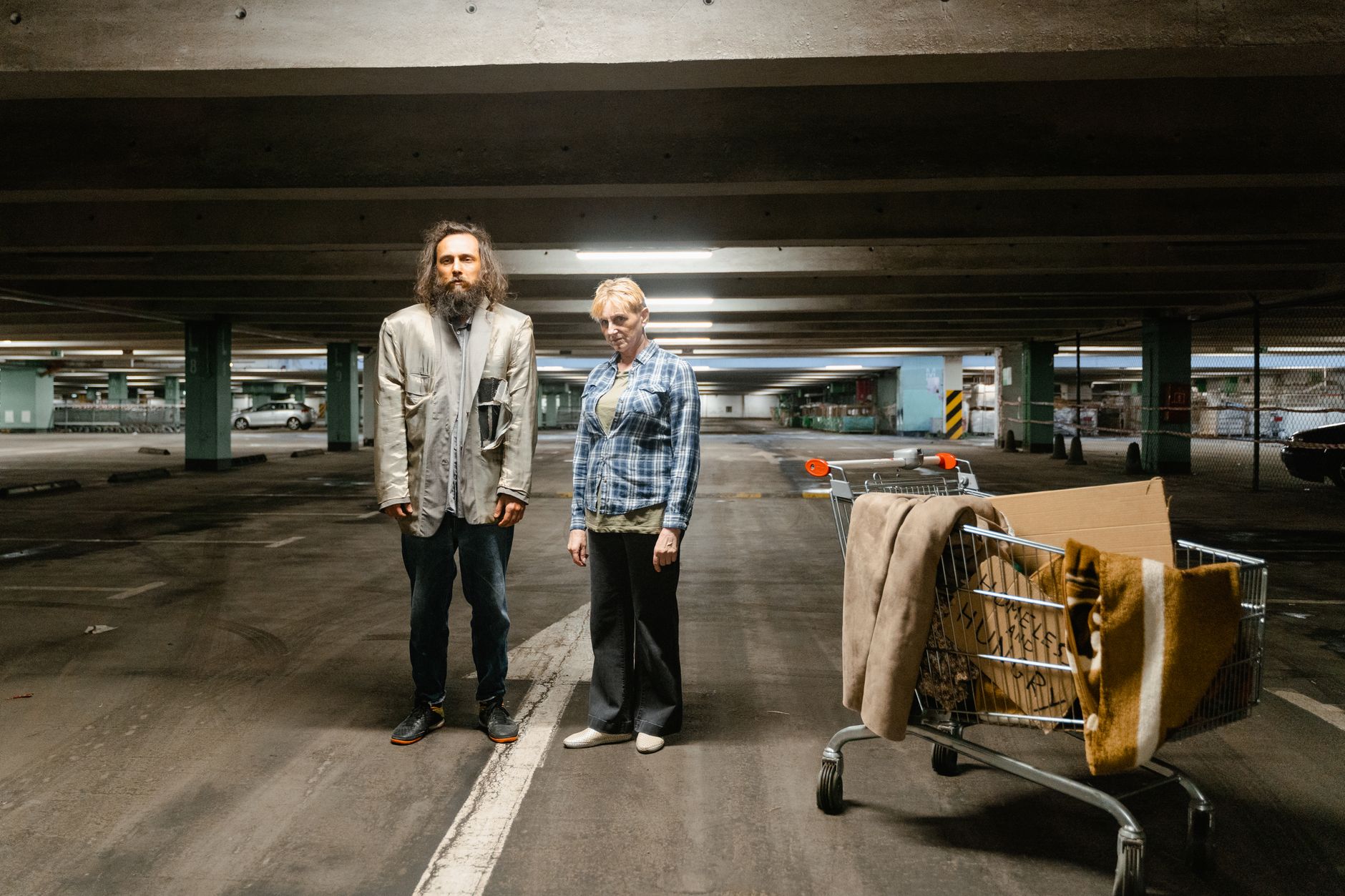
SAN DIEGO — As an 8-year-old boy steered his bicycle in figure eights, his mother piled three plates with pizza and pineapple slices from an outdoor kitchen shared with more than a dozen other families who call this parking lot home.
She carried the plates past her family’s sedan — their last asset and, until recently, their only shelter — and placed the dinner inside a recreational vehicle assigned to them for the next six months.
Read Also: Math scores rise in high needs district
After dinner, she helped the third grader with his homework, then made sure he showered and brushed his teeth before bed.
The next morning, she drove the 10 miles to her son’s school, where she works as a part-time site monitor.
Their belongings and beds and private bathroom, meanwhile, remained secure at the city-owned lot, where homeless families like theirs find temporary stability.
“He likes it here,” said the mother, M., who is being referred to by her first initial to protect her family’s privacy.
“We can actually cook. I waste less money. There’s a lot to like.”
Since late last year, M. and her family have been living in parking lots opened by the city of San Diego, the local school district and a nonprofit partner.
Priced out of San Diego’s housing market, they now call the RV lot their temporary home as they meet with a caseworker who helps them search for more permanent housing.
Family Homelessness Hits Record High
Family homelessness hit a record high in 2024, as the end of federal pandemic assistance and rising inflation pushed more families with children and unaccompanied youth out of their homes.
A sluggish labor market and high housing costs have further strained family budgets.
And now, as the number and visibility of unhoused families continue to climb, a handful of school districts are considering their parking lots as a way to shelter homeless students and their families.
The city of San Diego began experimenting in 2017, when it partnered with nonprofit Jewish Family Service to convert the first of what are now four parking lots into safe places to sleep.
It added its first lot prioritizing families in 2023.
A Model Spreads Beyond California
In Ohio, the Cincinnati school district later this spring will open its first safe parking lot for families at a downtown elementary school.
The teachers union for Fayette County Public Schools, in neighboring Kentucky, has asked its school board to follow Cincinnati’s lead.
San Diego’s parking program has drawn some opposition, including from nearby residents and private developers who worry about crime and impact on property values.
Progressives here also wonder, quietly, whether the program diverts attention and resources from addressing why families lose their housing in the first place.
“Parking lots are a terrible option, but there are options that are worse,” said Jennifer Erb-Downward, director of housing stability programs and policy initiatives for Poverty Solutions, a University of Michigan project to promote economic mobility.
“Often the only other option is literal homelessness, in your car and on the streets. This creates a middle ground where you can get families into the system, where you can try to meet their needs and in a place that keeps them safe.”
A Temporary Solution
The San Diego school district says students can’t learn unless they’re safe and healthy.
It refers families to city shelters, but those don’t have nearly enough space to accommodate the need.
“The goal is for this to be a way station,” Kristy Drake, the district’s liaison for homeless and foster youth, said of the school district’s lot.
“When families drive onto this lot,” Drake added, “they come into this wider network of support and resources. The goal is to move on. Hopefully no one’s there too long.”
In California, which has the largest homeless population in the country, family homelessness has risen 14 percent since before the pandemic.
According to the most recent data from the Department of Housing and Urban Development, nearly 260,000 people in families with children experienced homelessness — a jump of more than 50 percent since before the pandemic.
M., who grew up in nearby Calexico and has lived in San Diego since 2012, lost her housing after the expiration of the subsidy her family received through a federal rental assistance program Congress created during the pandemic.
“It was like, there’s no way we can do that,” said M. “We tried to look for an affordable place,” she added. “They’re all asking three times rent and a 650 credit score. That’s impossible right now.”
In San Diego County, there are roughly 1,500 people in families experiencing homelessness, but only a handful of emergency shelters offer space for children and parents.
San Diego, the county and several surrounding cities have recently closed their waiting lists for housing vouchers that subsidize the cost of rent.
M. did not want to leave the city, but had few options.
A Safe Parking Lot
A security guard station separates the gates to the Central Elementary lot from construction on a busy boulevard in the eastern City Heights neighborhood.
So far, 15 families have used one of the 40 spots for vehicles there.
In a pair of old portable classrooms, the district and JFS added microwaves for families to prepare food.
Parents can meet with case managers while students access Wi-Fi to do homework or play on the school’s old soccer field.
For M. and some other parents, the lots are preferable to shelters, many of which keep hard curfews, require that minors be supervised at all times and lack quiet space to do homework, said Jesse Mendez, director of the safe parking program for JFS.
By contrast, the Rose Canyon lot provides each family with their own trailer.
With philanthropic support, the city and JFS also recently added the covered communal area, which includes a small library, dining and study area, charging station for electronics and the shared kitchen.
“Here, you’re choosing who gets to sleep next to you and in a place where you’re safe,” Mendez said.
“Kids end up here by no choice of their own. I don’t want them to even realize they’re experiencing homelessness.”




Leave a Reply