
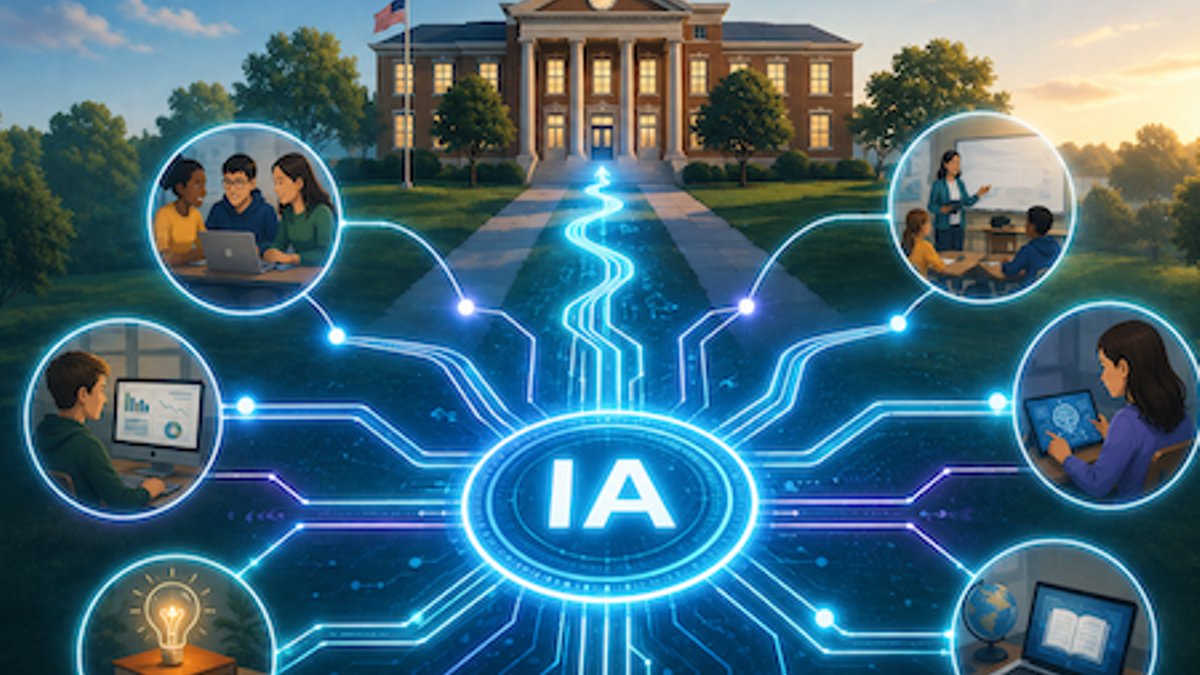
The use of Artificial Intelligence (AI) in school public relations (PR) is on the rise, with a new report highlighting the need for responsible use of this emerging technology. According to the report, 91 percent of school communication professionals are already using AI tools in their work.
Responsible AI Use in Schools
The report, titled “Future-Proofing K-12 Communications: School PR Strategies in the Age of AI,” was published by the National School Public Relations Association (NSPRA) and ThoughtExchange, an engagement platform. It draws on insights from 200 school communication professionals across 37 states.
The findings show that AI is being used to enhance day-to-day work, but also highlight the importance of thoughtful policies, staff training, and transparency around its use. Barbara M. Hunter, executive director of NSPRA, noted that while AI offers exciting potential, it cannot replace the strategy, relationships, and human voice that define effective school PR.
Related: Ignite Reading Again Approved for 1‑1 Literacy Tutoring
Key Findings and Recommendations
The report reveals that 69 percent of respondents’ districts do not have a formal policy on employee AI use, and 61 percent do not disclose their use of AI in official communications. To support responsible AI use, the report outlines four key recommendations for school systems: enhance AI education and awareness, accelerate policy timelines, expand AI policy scope, and shift from urgency-driven to proactive policy formation.
These recommendations are paired with practical tips to help districts bridge the gap between emerging technologies and the people using them. The guidance reinforces that AI is most effective when paired with human oversight and communication rooted in trust. As George Psiharis, CEO of ThoughtExchange, noted, “the authenticity of human connection remains at the heart of trust and understanding.”
School communicators are using AI to streamline processes, improve accessibility, and respond quickly in time-sensitive situations. While many report increased efficiency and clarity, concerns remain around data privacy, misinformation, and overreliance on automation. School districts that deeply listen to their communities drive better, more aligned policy outcomes and enhance engagement.
Building trust is essential for ensuring the benefits of AI are equitably distributed. By prioritizing transparency, accountability, and human oversight, school districts can harness the potential of AI to support students, staff, and families.
Related: Fulbright survives after elimination amendment defeated
The report’s findings and recommendations provide a roadmap for school districts. By following these guidelines, districts can ensure that AI is used in ways that reflect ethics, transparency, and a clear understanding of the role human judgment still plays in effective school PR, ultimately supporting the success of students, staff, and families.
They can help bridge the gap between emerging technologies and the people using them.
Responsible AI use is necessary for school districts, and district leaders must prioritize it and provide guidance and support for school communicators.



Leave a Reply