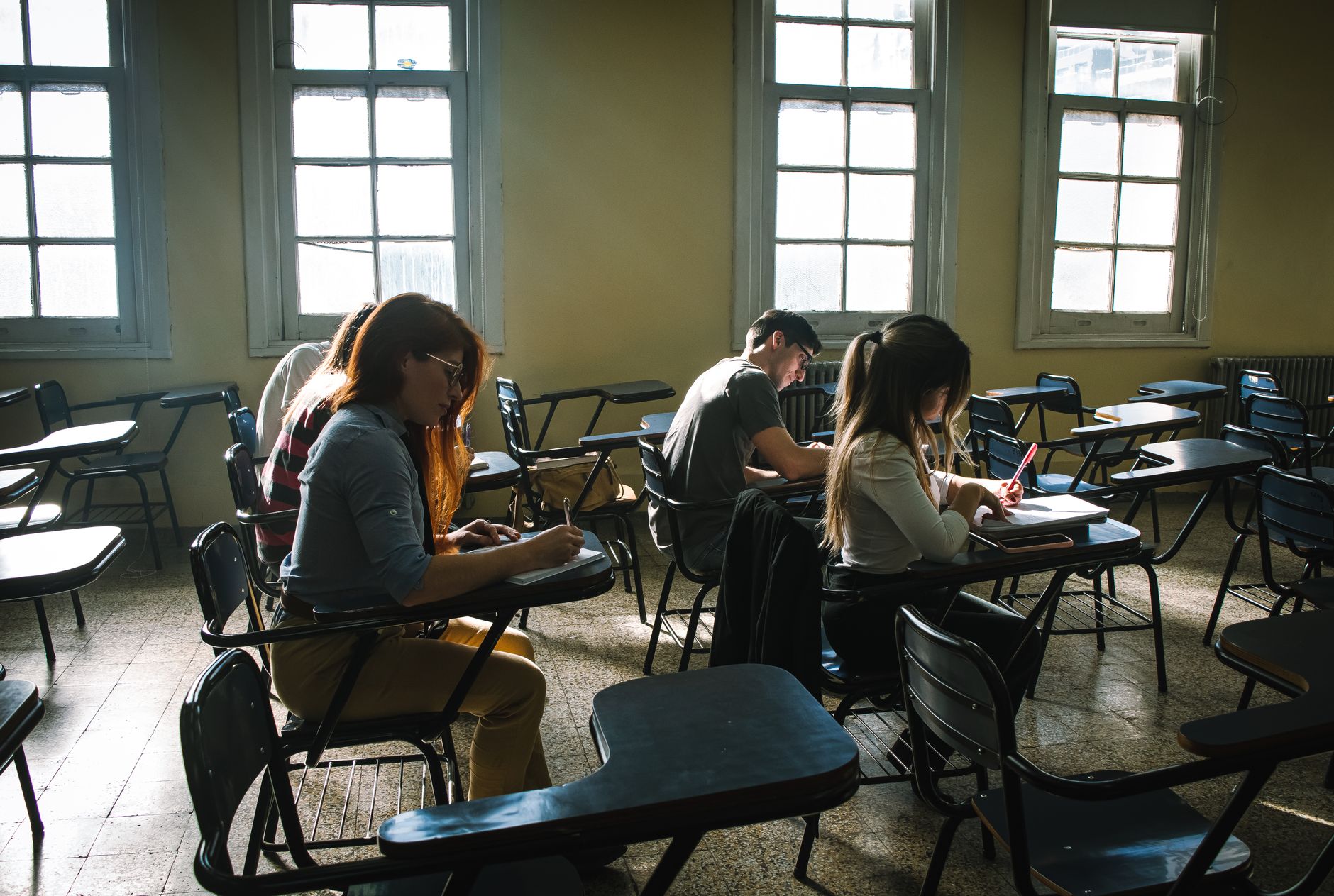
Public schools in the U.S. are often where young people first encounter democracy. Yet, for most students, these institutions remain the last democratic spaces they experience without a vote. School boards, typically staffed and run by adults, make decisions that affect students daily. But a growing trend is shifting that dynamic—though not always smoothly.
Student voices on school boards face pushback
In Washington County, Tennessee, a high school student recently questioned her superintendent about school consolidation and graduation goals. Board member Keith Ervin, decades her senior, responded with a comment about her appearance. The superintendent and board chair laughed, and no one intervened. Days later, the board censured Ervin for the second time over misconduct toward students. He has not resigned.
Read Also: Singing helps young children learn to read
Tennessee’s new law requires most districts to seat student members on school boards in an advisory, nonvoting role. The student who spoke up was fulfilling her role. The adults around her were not.
This is what happens when young people are added to decision-making rooms without preparing adults to share power. Student board members are not new. In 1975, a 16-year-old in Maryland became one of the first with voting rights. The practice has since grown, but slowly. Today, over 33 U.S. states allow student board members. More than 1,500 students currently serve on school boards, representing 20 million peers.
Student representation: A test of democracy
In some districts, student members are treated as colleagues. In others, they are props or targets. When a Maryland student voted on pandemic school closures, he faced online harassment, a bill to remove his position, and a federal lawsuit. He kept his seat. The lesson: When students carry real weight, adults push back.
In Alaska’s Mat-Su Borough, a student named Ben Kolendo challenged how the board selected a library committee. The board stripped him of his title, voting rights, and most speaking privileges, reducing his role to a “brief report” at meetings. In Florida, a student delegate faced an Islamophobic campaign. She argued against removing her position: “This role is not a target.”
These moments reveal how adults react when students shift from symbolic participation to actual governance. But not all stories end in backlash. A study of 68 Virginia school board meetings found that boards with student members had fewer confrontational exchanges and more civil discussions.
What makes student representation work?
The difference, researchers suggest, lies in how power is structured. Districts that take student roles seriously implement elections, yearlong terms, training, and voting rights. In Tennessee, despite having four student members on paper, only one sits on the dais at a time. That student is unpaid, nonvoting, and appointed by the principal with no required training.
Students in Washington County have called for policies requiring board members to be trained in “sexual assault and appropriate conduct.” The stakes are broader than any single district. For most Americans, school boards are the last democratic institution they closely watch before losing interest. If the lesson taught is that adults will mock students or strip their votes, young people may disengage entirely.
Student members won’t fix governance alone. But early research shows boards with students spend less time fighting and more time focusing on students. For years, young people have been given ceremonial roles. It’s time to ask them to help run institutions. If districts can’t give students real power, they should not create these positions at all.
A nonvoting seat rotated monthly and handed out by the superintendent is not representation. It’s a photo op. The shift from symbolism to substance matters. Without it, the democracy we inherit risks being less credible to the next generation.




Leave a Reply