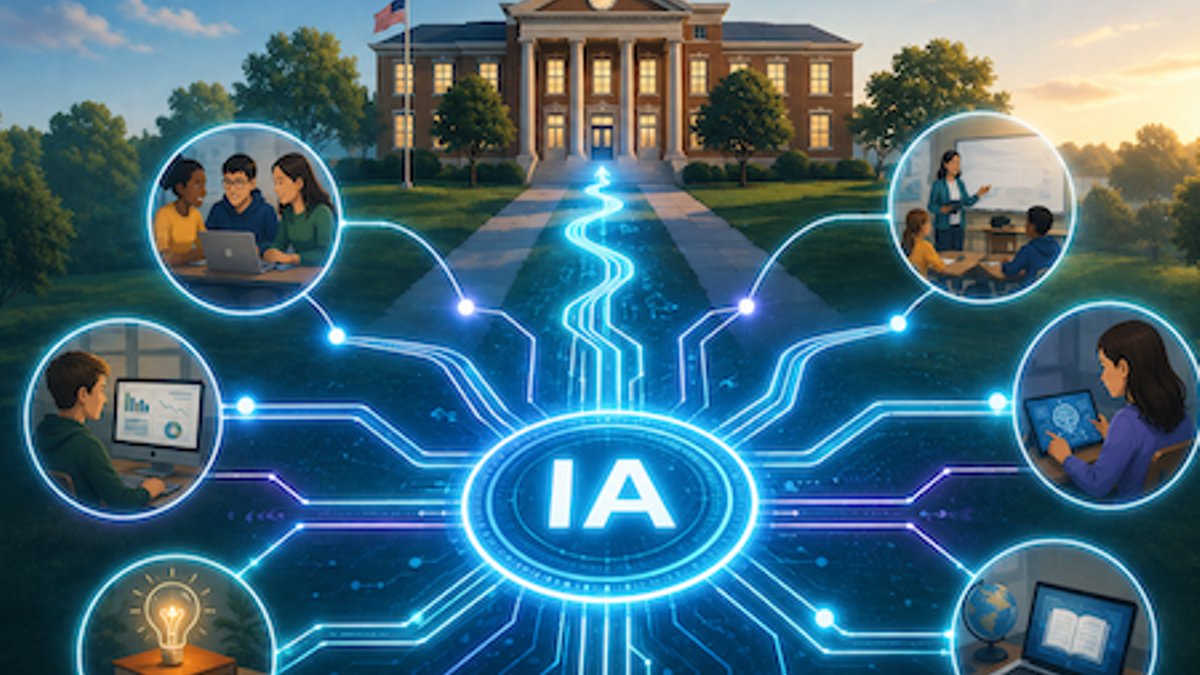
School districts across the country are rushing to set rules for artificial intelligence in classrooms, but many lack a clear vision of what students need to succeed after graduation.
Guidance arrives before goals are set
Thirty-four states and Puerto Rico have issued formal AI guidance for K-12 schools, a change that occurred rapidly. Just a few years ago, no state had such policies. This year alone, more than 70 bills addressing AI in education have been introduced in 27 states, covering student privacy and teacher training.
While policymakers debate restrictions on AI use, they avoid addressing a fundamental issue: what skills students will need in a world where AI is everywhere. Without answering this, regulations may become a collection of limits rather than a plan for preparation.
Some education leaders say the focus on rules is too soon. “Before schools decide what students should avoid, they need to know what to encourage,” said Scott Laband, President and CEO of Colorado Succeeds. That requires looking beyond immediate concerns like cheating or data privacy to the long-term demands of employers and the job market.
The risk of repeating past mistakes
This isn’t the first time schools have struggled to adapt to technological change. A decade ago, coding bootcamps and computer science degrees were promoted as the path to high-paying jobs. Many students invested in these programs, only to find those fields saturated or automated before they could enter the workforce.
Related: Canada fraud case reveals deep flaws
The lesson is clear. Short-term trends can mislead education systems. If schools focus too much on today’s demands, they may leave students with skills that don’t last. The challenge now is to avoid repeating that mistake with AI.
The speed of change makes this moment different. AI isn’t just another tool—it’s reshaping industries faster than curricula can adjust. Without a shared understanding of “AI readiness,” these efforts may remain disjointed rather than part of a coherent strategy.
Equity is another concern. If some schools allow AI while others ban it, students could enter the workforce with unequal exposure. That gap could worsen existing inequalities, especially if AI access becomes a job requirement.
Defining success beyond the classroom
Most AI rules focus on academic integrity—preventing cheating, protecting data, and detecting AI-generated work. These concerns matter, but they don’t address the bigger question: how to prepare students for careers that may not exist yet.
Critical thinking, creativity, and adaptability are often seen as lasting advantages in an automated world. The difficulty is that these skills are harder to measure than technical abilities like coding. Schools have long optimized for standardized tests and quantifiable outcomes. Shifting to a model that values flexibility over memorization requires rethinking how success is defined.
Related: Schools map out responsible AI use
Change is slow in education, and AI is moving faster than traditional policymaking. Some states are forming task forces or pilot programs, but these efforts often lack coordination. Without a unifying framework, students could receive a fragmented education that leaves them unprepared.
Deciding what students need involves competing priorities. Employers may push for technical skills, while educators advocate for a broader foundation. Parents and students face shifting rules and high stakes.
For now, the most practical step is to begin discussions. Schools should gather stakeholders to define “AI readiness,” focusing not just on restrictions but on what students should master. The process is complex, and agreement isn’t guaranteed. Without it, the rush to regulate AI may distract from the real work of preparing students for an uncertain future.
One certainty remains: AI isn’t waiting. The challenge is whether education leaders can act quickly enough to keep students from falling behind.




Leave a Reply