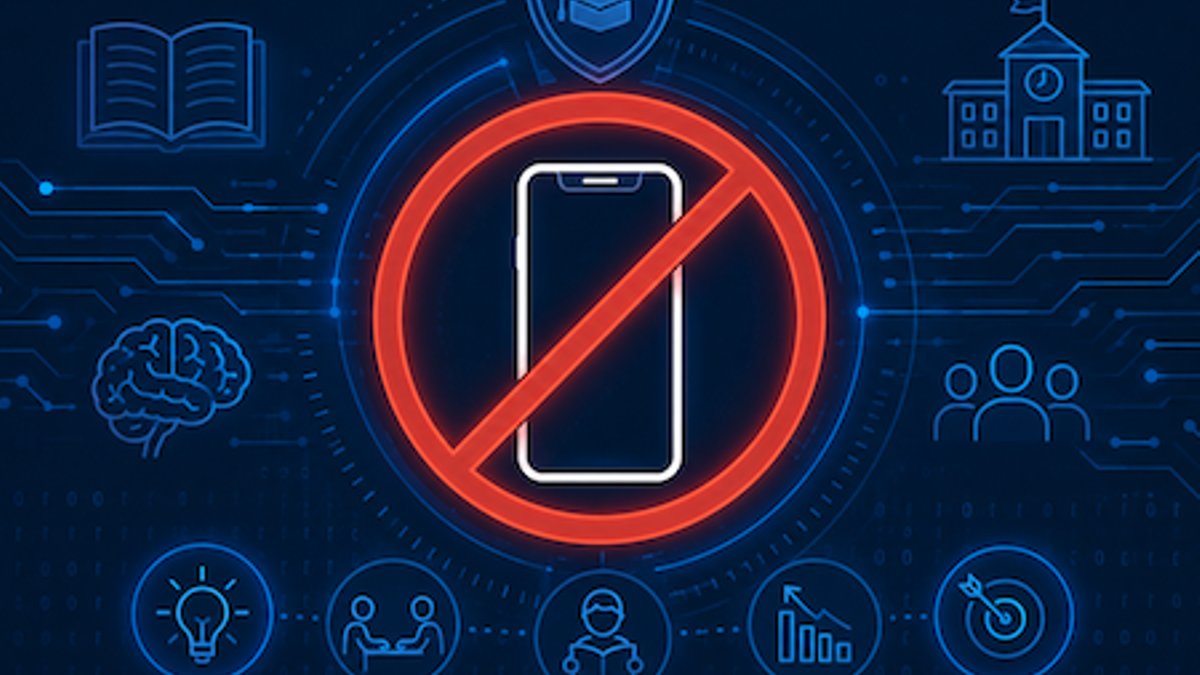
States across the nation are wrestling with how to shape cell phone policies in schools that balance learning needs with safety concerns, a debate that has intensified after Georgia lawmakers passed House Bill 1009 (HB1009) to limit student phone use during class. The bill, now awaiting the governor’s signature, joins a broader movement as districts examine whether outright bans or more subtle rules best serve students.
What the data say about current restrictions
According to the National Center for Education Statistics, roughly 77 percent of public schools already prohibit cell phone use while instruction is underway. Teachers frequently cite disruptions, shortened attention spans, and added classroom‑management burdens as reasons for these rules. The U.S. Surgeon General has also warned that heavy smartphone and social‑media consumption among adolescents can interfere with sleep and contribute to anxiety.
Parental attitudes are not uniformly supportive. Surveys indicate strong approval for limiting phones during lessons, yet support drops sharply when asked about all‑day prohibitions. Parents often cite emergencies and general safety as reasons they want their children to stay reachable, especially in districts where emergency notification systems are viewed as insufficient.
Related: Schools draft AI policies amid uncertainty
Enforcement remains uneven. In schools with strict policies, teachers still shoulder the responsibility of policing phone use, leading to inconsistencies and added workload. Administrators must allocate staff time and resources to monitor compliance, a challenge that grows in larger districts.
Emerging middle‑ground solutions
One model gaining traction is “controlled access,” which allows students to keep devices but restricts use during instructional periods. Secure storage lockers or lockable cabinets can hold phones while teachers work, then release them for breaks or after‑school activities.
Standardized storage solutions aim to reduce the “policing” burden on teachers, creating a more consistent environment across classrooms. By removing phones from sight during lessons, schools hope to lower distractions and limit conflicts that arise when expectations are unclear.
Related: Nepal education firms oppose tough new rules
Future policies will likely keep experimenting with hybrid approaches.
Looking ahead, it seems likely that schools will continue to experiment with hybrid policies. The core issue is not the presence of technology but the way it is integrated into daily routines. Administrators must consider whether their existing emergency communication systems can reliably replace personal devices before imposing stricter limits.
While legislation like HB1009 marks a step toward clearer guidelines, the practicalities of enforcement suggest that schools need more than rules on paper. Policies that incorporate secure storage, clear expectations, and technology that supports instruction may offer a more sustainable balance. As more states watch Georgia’s experience, they will likely weigh both the academic data and the parental concerns that have shaped this ongoing conversation.





Leave a Reply