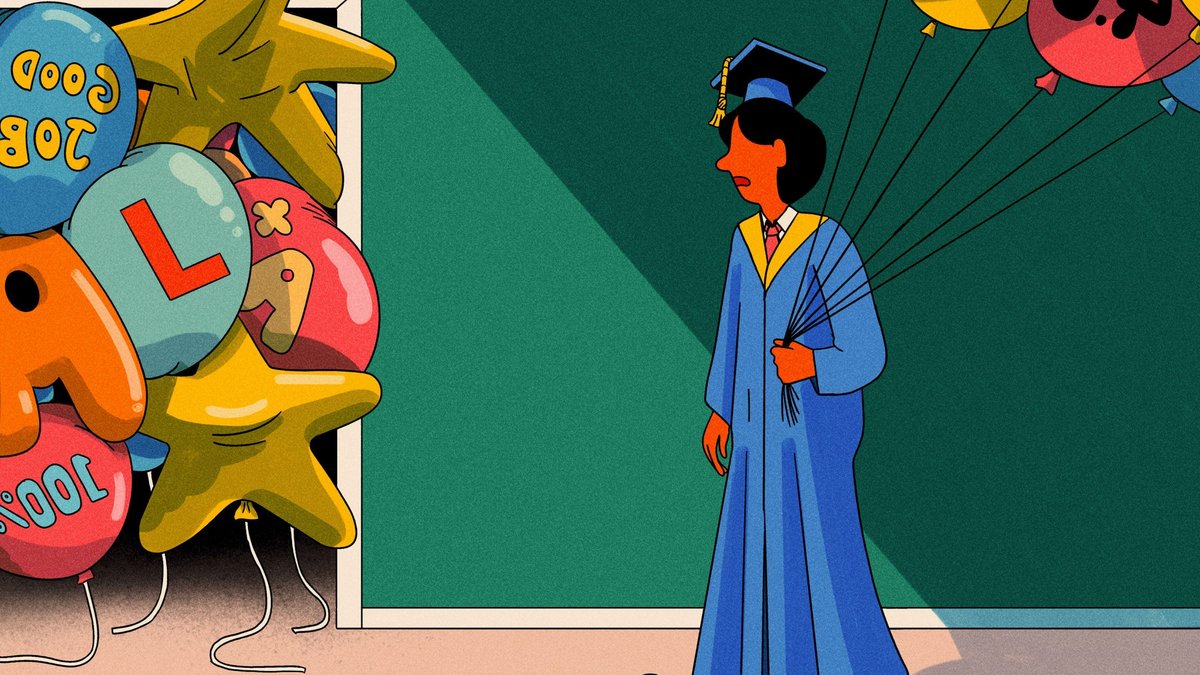
South Carolina has enacted a law banning minimum grades in K-12 schools, establishing one of the strictest state-level measures against grade inflation in the country. The legislation, signed in May, eliminates policies that require teachers to assign a minimum grade—such as 40 or 50—instead of a zero for incomplete or missing work. Educators and school leaders argue these practices have allowed students to graduate without fulfilling basic academic requirements, weakening the credibility of diplomas.
A 2021 study by the ACT revealed that the average high school GPA climbed to 3.36 by that year, up from 3.17 in 2010, while standardized test scores remained stagnant or declined. This gap between grades and actual academic performance has raised alarms among colleges, including Harvard, where faculty limited A grades to 20% of a class plus four students in response to pandemic-era grade inflation.
Patrick Kelly, director of governmental affairs for the Palmetto State Teachers Association and a high school teacher, described the problem directly: “At any high school graduation, I promise you, there will be a child who walks across the stage where every teacher in the room is going to go, ‘Wait, how did they graduate? They didn’t do anything.’”
Grade floors were originally introduced to prevent a single failing assignment from disproportionately harming a student’s GPA. However, critics now argue the policies have created a system where effort no longer determines outcomes. An anonymous South Carolina high school teacher reported that half a dozen seniors passed their classes this spring without submitting any work due to these policies. “It’s not the kids’ fault for figuring out how to beat the system,” the teacher said.
Related Post: Schools Miss The One Literacy Metric That Matters Most
How Schools Will Enforce New Grading Rules
The new law threatens districts that don’t comply with the minimum grade ban with the loss of 10 percent of their state funding. It also requires that students turn in any missing assignments before they become eligible for credit and content recovery programs—courses that allow students to make up sections of a class or to pass a class they initially failed. A section of the law also instructs schools not to count most benchmark tests, standardized tests given throughout the year to track student progress, toward a student’s final grade, except under specific circumstances.
Eric Duncan, director of P-12 policy at EdTrust, applauded the legislation for separating benchmark tests from the grading process and encouraging schools to be more transparent with parents. “It’s all part of honesty about where students are and what they need to do to get to grade level,” Duncan said.
Most teachers support the law, with Kelly emphasizing that policies like grade floors and credit recovery had led to “diplomas that have no value beyond the paper they’re printed on.” Even some parents, like Cinnamon Stetler of Greenville County, recognize the trade-offs. “But for high schoolers, GPAs matter, to college admissions, for example, and inflated grades have ‘ripple effects,’” Stetler said.
Greenville County Schools, the state’s largest district, had already planned to phase out grade floors for middle school assignments this year. However, the state law now requires the elimination of such policies across all grade levels, including report cards. Susan Stevens, the district’s assistant superintendent, warned that the change could increase failure rates, forcing schools to develop new support systems for struggling students. “We’ll need to identify ways to help at-risk learners before they fall behind,” she said.
Pandemic Worsened Grade Inflation Nationwide
Grade inflation predates the pandemic but worsened during remote learning. A Fordham Institute survey found that 25% of teachers work in schools with “no zero” policies, while Washington state saw the number of districts adopting such measures double between 2015 and 2024. David Griffith, the institute’s research director, described the shift as “unavoidable” under pandemic conditions but noted that reversing course afterward has proven difficult. “Once standards drop, rebuilding them is a challenge,” he observed.
Related Post: Students on School Boards Work Only If Adults Listen
Grade floors also distort parental perceptions of student progress. Dena Crews, president of the South Carolina Education Association, warned that artificially high grades in elementary school can obscure learning gaps. “If you’re giving them the minimum of a 60, by the time they’re getting to middle and high school, they’re taking those gaps and deficits with them when they could have gotten the extra help and extra support in the early childhood and elementary grades,” she said. Research indicates parents trust report card grades more than test scores, meaning grade floors may delay interventions for struggling students.
While the law’s full effects are still unfolding, teachers report it has already restored their ability to grade honestly. The state’s on-time graduation rate reached a 10-year high in 2025, though only 33% of seniors met college-readiness benchmarks by graduation. The disparity between diplomas and actual preparedness highlights why critics view grade floors as an inadequate solution.
Graduation Rates Rise Despite Readiness Gaps
The state’s high school graduation rate reached 87 percent in 2025, marking a decade-long peak. However, only about a third of graduating seniors met college readiness standards based on test scores and advanced coursework. Chronic absenteeism also remained high, with more than 20 percent of students missing significant amounts of school, nearly double pre-pandemic levels.
Grade floor policies, both formal and informal, were widespread in South Carolina before the ban. At least 22 districts had official rules preventing zeros, while others enforced unofficial minimums, often setting floors at 40 or 50. Greenville County Schools, the largest district, had implemented a 50-point minimum for elementary and high school report cards over a decade ago. Middle schoolers later faced the same restriction on all assignments.





Leave a Reply